
A free, self-hosted AI studio with 200+ unfiltered
Open Sourceaivideoimageself-hosted
Free
Video & Animation
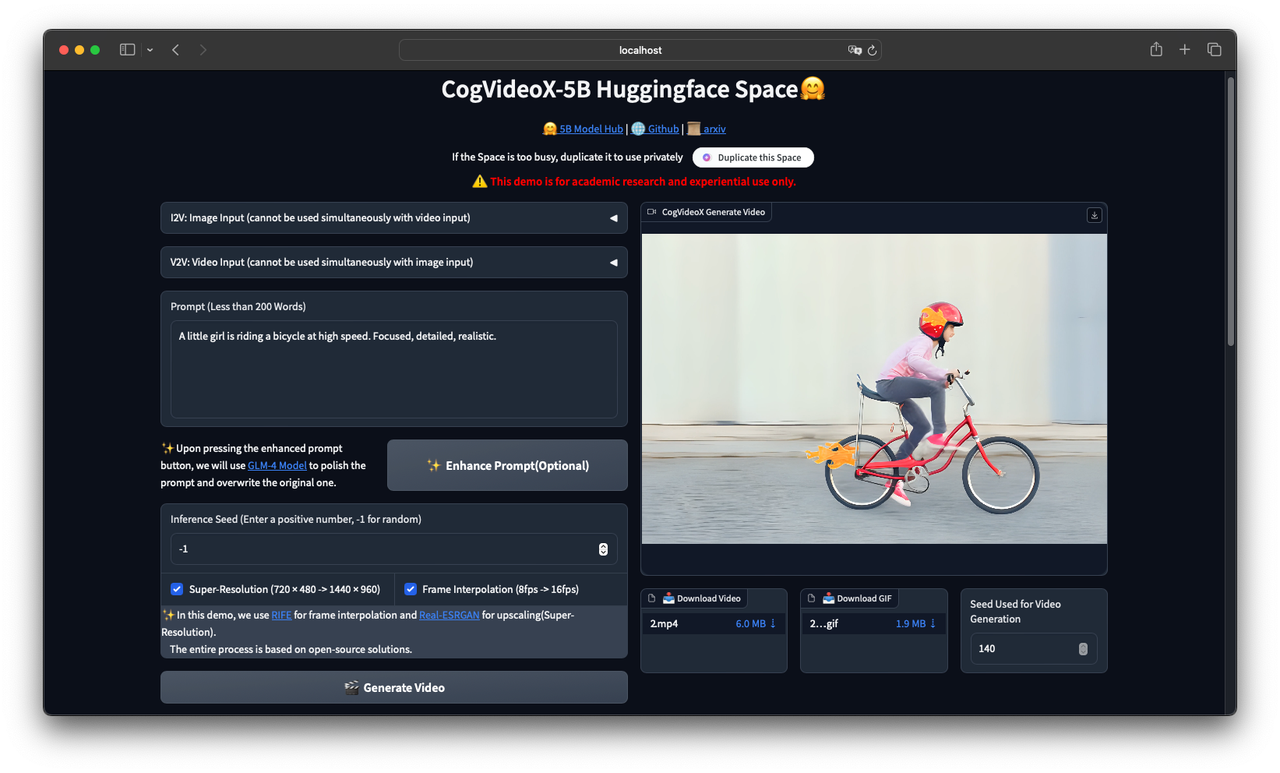
CogVideo represents a significant milestone in the realm of artificial intelligence as a pioneering, open-source text-to-video generation tool. Developed by THUDM, this framework leverages a sophisticated Transformer-based architecture to interpret textual prompts and translate them into coherent, high-quality video frame generation. At its core, CogVideo utilizes large-scale text-to-video pretraining. This means the model has been trained on vast datasets to understand the complex relationships between language, temporal dynamics, and visual rendering. Unlike many proprietary black-box models in the generative AI space, CogVideo takes a transparent approach. Its model weights are openly available on GitHub, allowing researchers, developers, and technologists to publicly use, inspect, and modify the underlying code. This makes it an incredibly attractive asset for the open-source community and academic institutions alike. The primary audience for CogVideo includes machine learning engineers, AI researchers, and advanced developers who have the technical proficiency to deploy and run complex neural networks. It is particularly valuable for professionals looking to generate creative marketing videos directly from text descriptions, as well as storytellers and animators aiming to produce compelling visual content. Furthermore, CogVideo serves as a powerful utility for generating synthetic data intended for computer vision training, alongside offering designers a highly efficient method for the rapid prototyping of video concepts. However, utilizing CogVideo comes with a notable technical barrier. The most significant drawback of this tool is that it requires substantial computational resources, specifically high-end GPUs, to run effectively and generate outputs in a reasonable timeframe. Therefore, while the software itself is free, the infrastructure needed to execute it can be costly, making it less accessible to casual hobbyists or creators without enterprise-level hardware. Despite these hardware constraints, CogVideo remains a highly capable and versatile framework. By successfully bridging the gap between natural language processing and video synthesis, it empowers developers to explore the cutting edge of generative AI. For teams equipped with the necessary computational power and technical expertise, CogVideo provides a robust, foundational platform for building next-generation video generation pipelines.
 Screenshot
 image
image
 image
image
 image
image
CogVideo is completely free and open-source, allowing developers to use and modify the model without any cost.
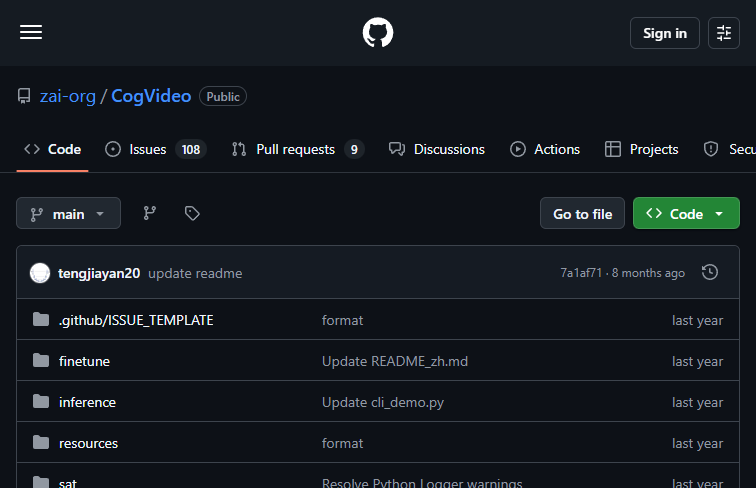
Summarized from the official site: https://github.com/THUDM/CogVideo
Yes, CogVideo is completely free and open-source. However, while the software itself costs nothing, you will need expensive, high-end GPU infrastructure to run it effectively.
Yes, CogVideo is an open-source tool. Its model weights are openly available on GitHub, allowing developers and researchers to use, inspect, and modify the underlying code.
CogVideo is a pioneering open-source text-to-video generation tool developed by THUDM. It uses a Transformer-based architecture and large-scale pretraining to translate textual prompts into high-quality video frames.
CogVideo is primarily used for generating marketing videos from text, creating storytelling and animation content, and synthesizing data for computer vision training. Additionally, designers can use it for the rapid prototyping of video concepts.
No, CogVideo has a high technical barrier because it requires substantial computational resources like high-end GPUs to function properly. This makes it less accessible to casual creators who lack enterprise-level hardware.
A free, self-hosted AI studio with 200+ unfiltered

Objective, community-driven leaderboard for text-t

Optimize and secure AI coding agents with this ope

Generate highly realistic AI images from text with