
A free, self-hosted AI studio with 200+ unfiltered
Open Sourceaivideoimageself-hosted
Free
Video & Animation

Advanced AI system for high-fidelity natural image synthesis.
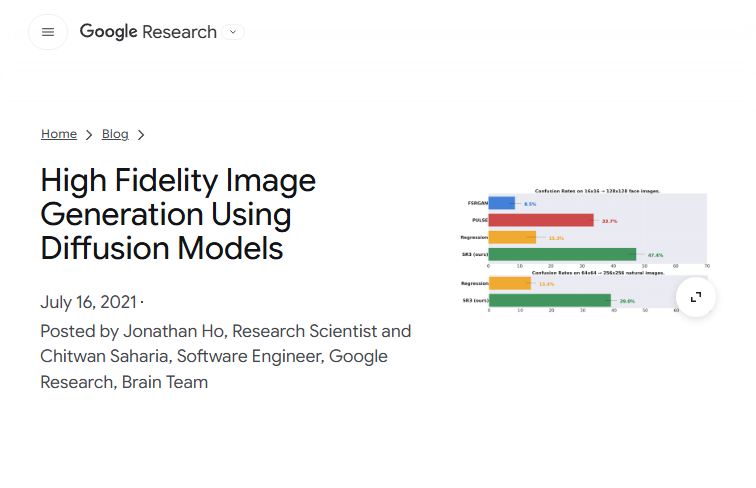
High Fidelity Image Generation Using Diffusion Models represents a landmark advancement in the landscape of AI image generation. Originally detailed by researchers, this approach harnesses the power of diffusion processes to achieve natural image synthesis that sets a new state-of-the-art standard. But what exactly are diffusion models? At their core, they are a class of generative models that learn to create data by progressively reversing a noising process. Instead of trying to generate a high-resolution, realistic image in one giant leap, the model starts with pure noise. Through a highly controlled sequence of steps—known as progressive denoising—the system gradually refines this random static into a coherent, highly detailed, and structurally sound natural image. This meticulous, iterative approach allows the model to capture exceptionally complex data distributions, resulting in outputs that boast unparalleled visual fidelity. This technology is tailor-made for a specialized audience. It is an indispensable asset for machine learning researchers, computer vision scientists, and developers pushing the boundaries of generative artificial intelligence. For academics and practitioners focused on natural image synthesis tasks, this framework provides a robust foundation for experimentation and innovation. The primary benefits of utilizing this methodology are undeniably clear. Most notably, it excels at producing incredibly high-fidelity images that outshine many traditional generative adversarial networks (GANs) in terms of both photorealism and structural consistency. By demonstrating the sheer power of diffusion processes, it successfully advances the state-of-the-art in generative modeling, opening new doors for creating ultra-realistic synthetic data. However, prospective users must be aware of a significant barrier to entry. The primary drawback of this architecture is that it requires substantial computational resources to train effectively. Training these models demands immense processing power, typically relying on large clusters of specialized GPUs, alongside considerable time investments. Consequently, while leveraging the resulting models for inference can be manageable, reproducing or tweaking the training phase is often restricted to well-funded research institutions or large tech enterprises. In summary, High Fidelity Image Generation Using Diffusion Models is not a casual, everyday creative application. Rather, it is a deeply technical, foundational tool that empowers the AI community to explore the upper limits of what automated image synthesis can achieve.
 Screenshot
As a machine learning concept and research project, it is freely accessible.
Summarized from the official site: https://ai.googleblog.com/2021/07/high-fidelity-image-generation-using.html
It is a research approach for natural image synthesis. Google Research highlights its ability to produce high-quality images through progressive denoising.
They were developed by researchers at Google Research, Brain Team. The specific publication was authored by Jonathan Ho and Chitwan Saharia.
A free, self-hosted AI studio with 200+ unfiltered

Objective, community-driven leaderboard for text-t

Optimize and secure AI coding agents with this ope

Generate highly realistic AI images from text with