
A free, self-hosted AI studio with 200+ unfiltered
Open Sourceaivideoimageself-hosted
Free
Video & Animation
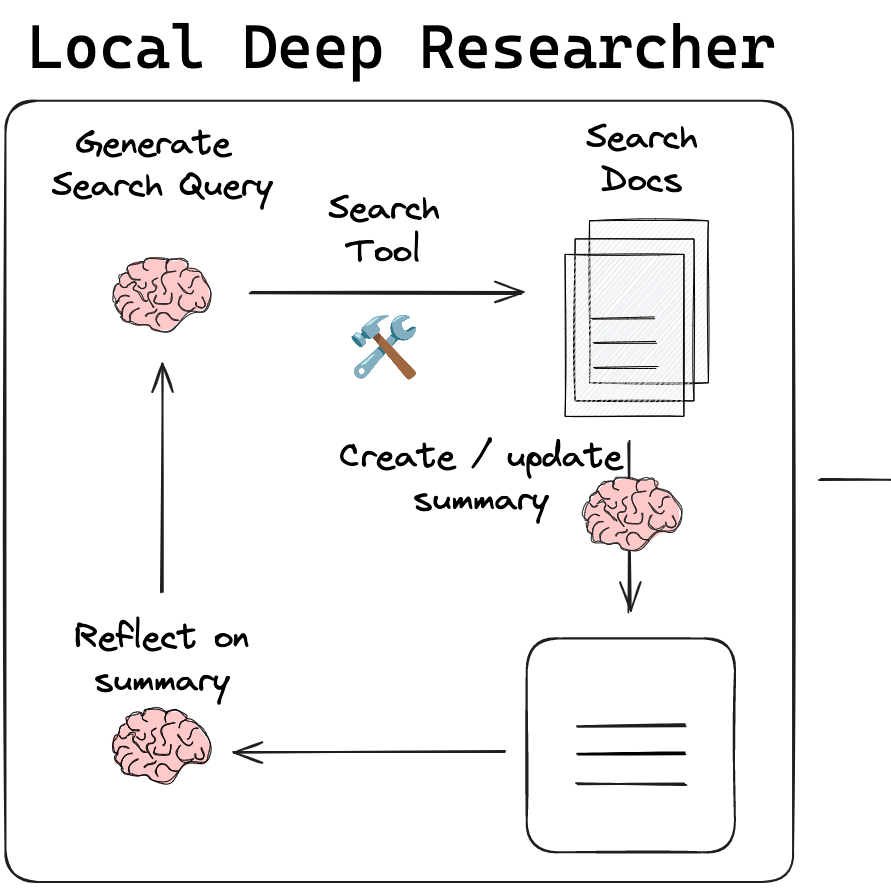
Open-source local deep web researcher and report writer
Local Deep Researcher is an open-source Python tool developed by LangChain AI that empowers users to conduct deep, iterative web research entirely on their own hardware. Unlike cloud-based research assistants, it runs locally, scraping online content, analyzing it with locally hosted large language models (LLMs), and generating structured reports—all without ever sending data to external servers. This design makes it an attractive option for privacy-conscious researchers, journalists, academics, and business analysts who need thorough, AI-powered research while retaining full control over their information.
The tool works by accepting a user query or topic, performing a web search (often via a configurable search API such as Tavily or a local search engine), scraping the resulting URLs, and then employing a local LLM (like Llama or Mistral, run through Ollama) to summarize and synthesize the material. The process is recursive: the system identifies knowledge gaps, formulates follow-up questions, and repeats the cycle to produce a comprehensive, multi-page report. All processing happens off-line, meaning once you've downloaded the necessary models, you can work without an internet connection—ideal for sensitive projects or traveling.
Local Deep Researcher is built with customization in mind. Its Python codebase is fully accessible, allowing developers to tweak scraping logic, change the LLM, modify report templates, or integrate additional data sources. While setup requires some technical proficiency—installing dependencies, pulling models, and possibly optimizing for GPU acceleration—the documentation and growing community make it approachable. Users should be aware that performance depends heavily on their hardware; a powerful GPU is recommended for larger models, though smaller quantized models can run on consumer laptops. Additionally, web scraping is inherently brittle: modern sites with heavy JavaScript, CAPTCHAs, or bot detection may hinder data collection compared to polished commercial APIs. However, for many research tasks, the tool ably gathers and condenses information from a wide range of blogs, news sites, and academic repositories.
With over 9,200 GitHub stars, Local Deep Researcher has clearly struck a chord with the self-hosted AI community. It represents a step toward democratized, private research automation, freeing users from subscription fees and data-sharing concerns. While not a plug-and-play solution, its flexibility and commitment to running locally make it a powerful asset for those willing to invest a little setup time. Whether you're performing market analysis, compiling a literature review, or just exploring a new topic, this tool offers a glimpse into a future where each of us can have our own private research assistant, custom-tailored and fully under our control.
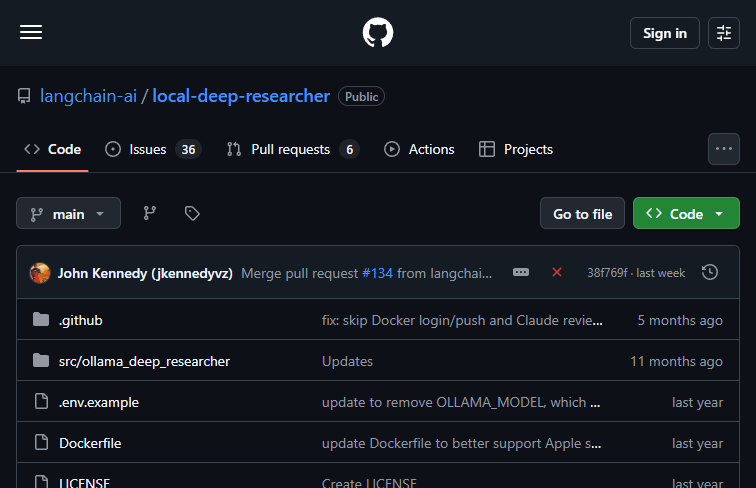 Screenshot
The tool is completely free and open-source, with no paid tiers.
Summarized from the official site: https://github.com/langchain-ai/local-deep-researcher
Yes, Local Deep Researcher is a fully open-source Python tool developed by LangChain AI. It has a highly accessible codebase that allows developers to customize scraping logic, modify report templates, or change the LLM.
No, all AI processing happens offline once you have downloaded the necessary models. You will only need an internet connection for the initial web search and URL scraping part of the research cycle.
No, the tool runs entirely on your own hardware and analyzes scraped web content using locally hosted LLMs without sending data to external servers. This makes it an ideal option for privacy-conscious users who want full control over their information.
A powerful GPU is heavily recommended for running larger models, though smaller quantized models can run on consumer laptops. Because all processing happens locally, your hardware capabilities will directly determine the tool's performance.
A free, self-hosted AI studio with 200+ unfiltered

Optimize and secure AI coding agents with this ope

Objective, community-driven leaderboard for text-t

Generate highly realistic AI images from text with