
A free, self-hosted AI studio with 200+ unfiltered
Open Sourceaivideoimageself-hosted
Free
Video & Animation
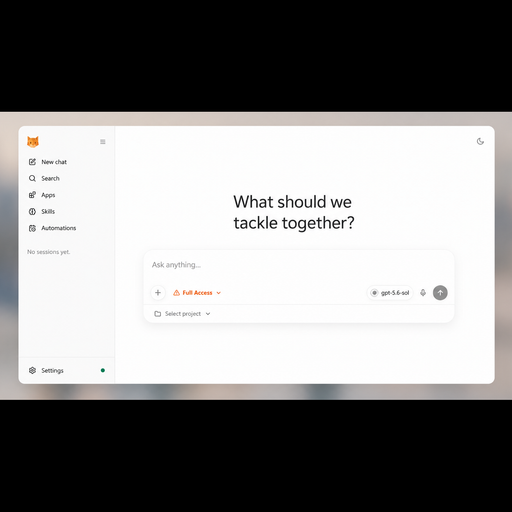
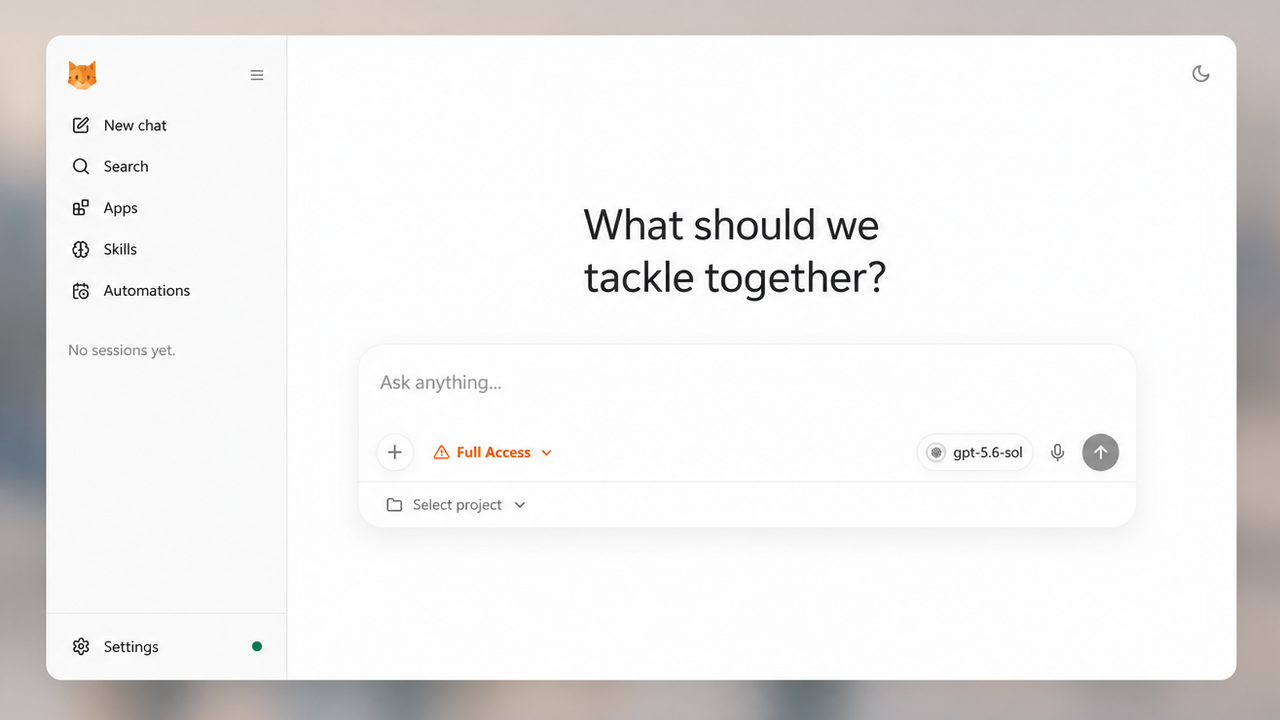
Nanobot is an ultra-lightweight, open-source Python framework designed to empower developers in building self-hosted personal AI assistants. Hosted on GitHub, this powerful developer tool provides a robust foundation for creating highly customizable AI agents without relying on third-party cloud services. At its core, Nanobot is built for flexibility and control. It allows developers to leverage multi-agent workflows, enabling the creation of complex systems where multiple specialized agents collaborate to complete intricate tasks. This makes it an ideal solution for automating repetitive tasks and streamlining comprehensive AI operations. One of Nanobot's standout features is its integrated WebUI. While many AI frameworks require developers to build their own user interfaces from scratch, Nanobot includes a ready-to-use web interface out of the box. This drastically lowers the barrier to interaction, allowing users to seamlessly manage their agents, monitor automated workflows, and communicate via custom chat applications. Furthermore, Nanobot natively supports essential AI capabilities such as persistent memory, external tool integration, and MCP (Model Context Protocol) support. The inclusion of memory ensures that your AI assistants can maintain context over long interactions, making them far more effective for continuous task management. Meanwhile, tool integration and MCP support allow the agents to interact with external APIs, databases, and systems, turning them from simple chatbots into highly functional digital workers. The framework is geared towards software developers, tinkerers, and tech-savvy users who want complete sovereignty over their artificial intelligence infrastructure. However, it is important to note that Nanobot is not a plug-and-play consumer application. Setting it up and deploying the environment requires a solid understanding of Python and technical deployment processes, which serves as its primary barrier to entry. Despite this learning curve, the payoff is immense. By choosing Nanobot, developers gain access to a scalable, deeply customizable ecosystem that supports everything from individual chat app development to sophisticated enterprise-level task automation. Since the project is completely open-source and self-hosted, users never have to worry about vendor lock-in, data privacy breaches, or recurring subscription fees. All data remains securely on the user's own infrastructure. Whether you are an independent developer looking to build a bespoke AI tool or a team aiming to automate internal processes with collaborative multi-agent workflows, Nanobot offers the essential building blocks to bring your autonomous AI projects to life efficiently.
 Screenshot
 image
image
 image
image
 image
image
The tool is free to use as it is an open-source project.
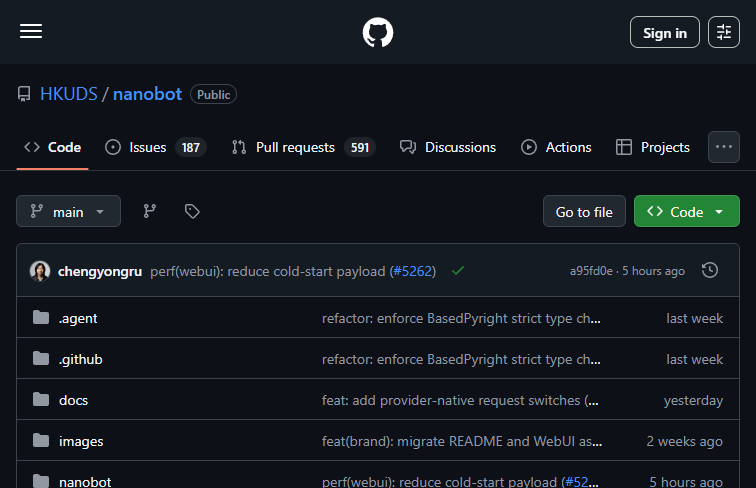
Summarized from the official site: https://github.com/HKUDS/nanobot
Yes, nanobot is completely free and open-source. You can host and use it without any licensing fees.
Nanobot is an ultra-lightweight personal AI agent framework. It allows users to create automated workflows and chat apps with memory and tool integrations.
Yes, nanobot is an open-source project. Its codebase is publicly available on GitHub under the HKUDS organization.
Nanobot is written in Python. This makes it highly accessible for developers working in AI and machine learning.
A free, self-hosted AI studio with 200+ unfiltered

Objective, community-driven leaderboard for text-t

Optimize and secure AI coding agents with this ope

Generate highly realistic AI images from text with