
A free, self-hosted AI studio with 200+ unfiltered
Open Sourceaivideoimageself-hosted
Free
Video & Animation
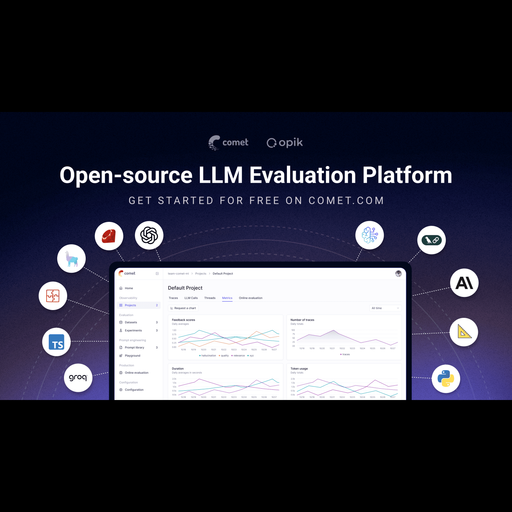
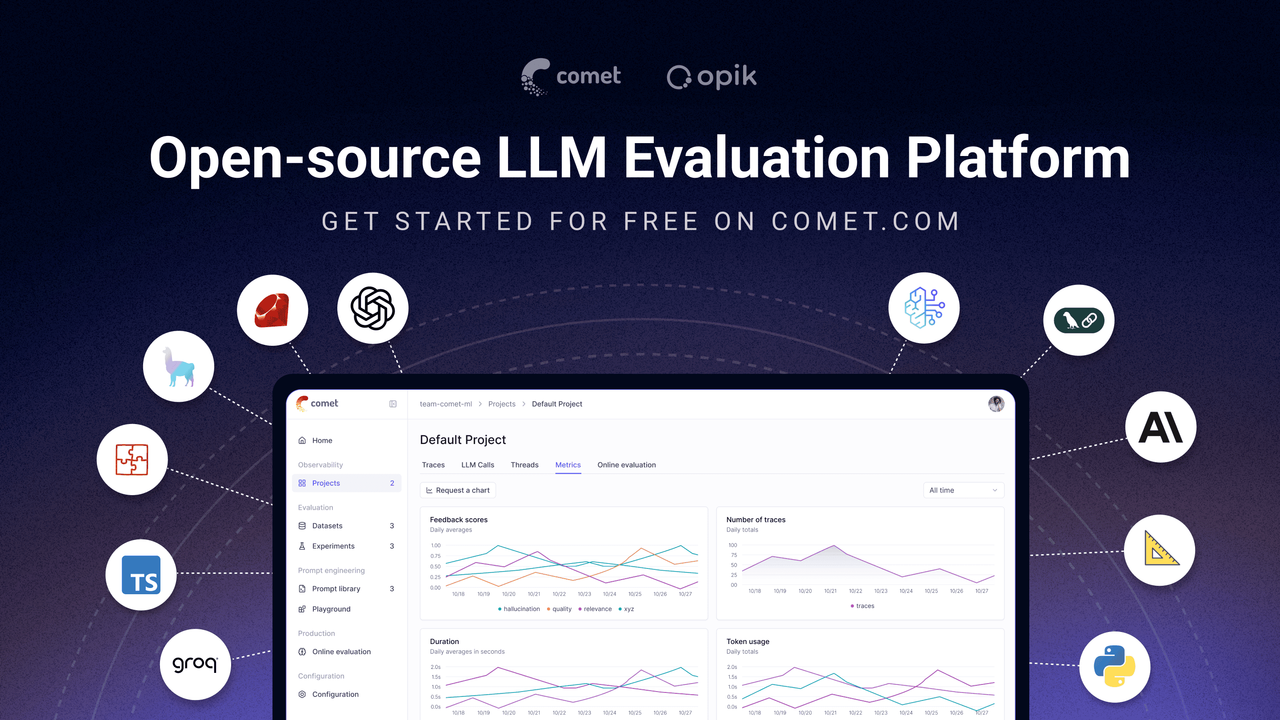
As Large Language Models (LLMs) and complex agentic workflows become deeply integrated into modern software, the need for robust observability and evaluation tools has never been more critical. Enter Opik, an open-source platform designed to help developers debug, evaluate, and monitor their LLM applications, Retrieval-Augmented Generation (RAG) systems, and multi-agent workflows. Developed by Comet and boasting over 21,000 stars on GitHub, Opik has rapidly become a highly popular and trusted solution within the AI engineering community. At its core, Opik functions as an all-in-one ecosystem that addresses the entire lifecycle of an AI application. For developers building intelligent systems, one of the primary challenges is understanding exactly how a model arrives at a specific output. Opik solves this through its comprehensive tracing capabilities, allowing users to meticulously track and trace AI model interactions. This deep visibility is invaluable when debugging complex multi-agent workflows, enabling engineers to pinpoint exactly where a bottleneck or hallucination occurs. By utilizing the open-source Python library, teams can easily integrate tracing directly into their existing codebases. Beyond simple monitoring, Opik provides automated evaluation frameworks designed to test and measure model performance systematically. Instead of relying on manual reviews, developers can set up automated tests to rigorously evaluate and test RAG systems. This ensures that the retrieval mechanisms are pulling the correct context and that the final generated responses are accurate and reliable. The platform further distinguishes itself by offering robust debugging tools specifically tailored for RAG architectures, helping teams refine their vector searches and prompt engineering. When applications are ready to scale, Opik equips teams with production-ready dashboards that deliver real-time monitoring. This allows stakeholders to keep a watchful eye on live environments, ensuring that the LLM applications maintain high performance and reliability in production. As a freemium offering, Opik provides flexibility in deployment. It is fully open-source, which means organizations prioritizing data privacy and security can opt for complete customization and self-hosting. However, this approach comes with a notable trade-off: self-hosting and integrating the tool effectively requires a high level of technical expertise. Additionally, while the tool itself is exceptionally powerful, its documentation and educational resources are heavily focused on Python implementations, which might present a steeper learning curve for development teams utilizing alternative programming languages. Despite these minor limitations, Opik remains a premier choice for developers seeking a comprehensive, transparent, and highly effective solution for AI observability and evaluation.
 Screenshot
 image
image
 image
image
Opik is an open-source platform that can be self-hosted for free, though the parent company may offer additional premium cloud or enterprise pricing options.
Summarized from the official site: https://github.com/comet-ml/opik
Opik is an open-source tool used to debug, evaluate, and monitor LLM applications, RAG systems, and agentic workflows. It provides comprehensive tracing, automated evaluations, and production-ready dashboards.
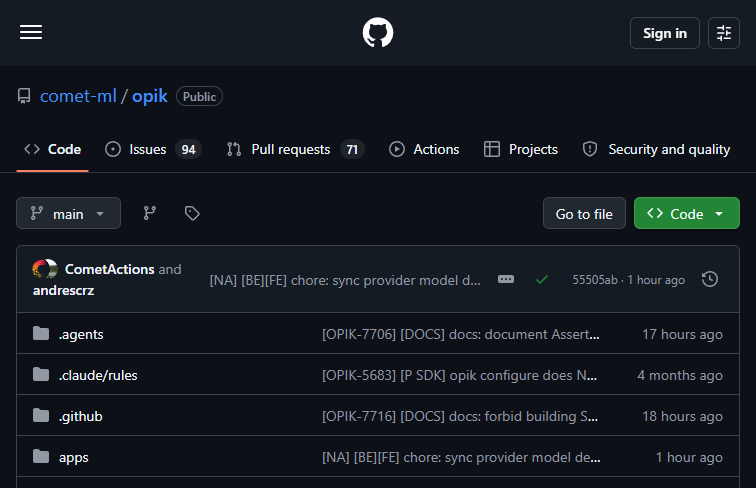
Yes, Opik is an open-source platform. Its source code is publicly hosted on GitHub by the comet-ml organization.
Opik is primarily built and utilized using Python. It is tailored for AI and LLM development ecosystems that rely on Python.
A free, self-hosted AI studio with 200+ unfiltered

Objective, community-driven leaderboard for text-t

Optimize and secure AI coding agents with this ope

Generate highly realistic AI images from text with