
A free, self-hosted AI studio with 200+ unfiltered
Open Sourceaivideoimageself-hosted
Free
Video & Animation
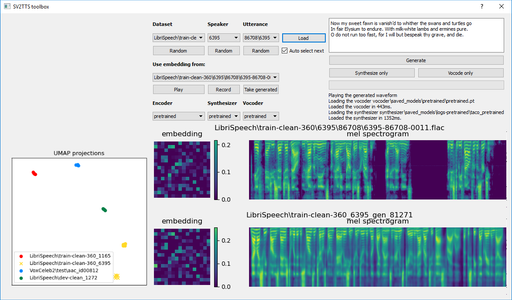
Clone voices and generate real-time speech from a
Real-Time-Voice-Cloning is a highly acclaimed open-source artificial intelligence project hosted on GitHub that has captured the attention of the global developer community. Boasting over 60,000 stars, this Python-based implementation represents a significant breakthrough in AI voice synthesis. At its core, the tool allows users to clone any voice using merely a 5-second audio reference clip and subsequently generate arbitrary, natural-sounding speech in real-time. This impressive capability is driven by advanced transfer learning techniques specifically designed for text-to-speech (TTS) adaptation. The project provides a robust foundation for anyone looking to delve deeply into the mechanics of AI-driven audio generation. Because it is entirely open-source, developers and researchers are granted full transparency into the underlying codebase, allowing for extensive customization and fine-tuning to suit highly specific project requirements. The primary target audience for this tool encompasses software engineers, AI researchers, and technically proficient creators. While the concept of generating a custom voiceover in seconds is undeniably powerful, successfully leveraging this technology requires a solid technical background. Users must navigate the complexities of a Python environment setup and possess adequate computational resources—typically a capable GPU—to ensure the model trains and runs efficiently. For those equipped with the necessary hardware and technical expertise, the potential applications are vast and transformative. Content creators can utilize the tool to generate bespoke voiceovers for videos or audiobooks, drastically reducing production time and costs. Furthermore, developers focused on digital accessibility can implement this technology to create highly natural-sounding text-to-speech systems, providing users with more engaging and personalized experiences. It is also an exceptional asset for academic and commercial research projects centered on interactive chatbot voices and advanced AI voice synthesis. Despite its demanding setup requirements, the ability to synthesize speech instantly from minimal reference audio makes Real-Time-Voice-Cloning an invaluable asset. It stands out not just as a fascinating experimental project, but as a highly practical toolkit that pushes the boundaries of what independent developers and researchers can achieve in the realm of custom audio generation without relying on expensive, proprietary software.
 Screenshot
 image
image
This is a completely free, open-source project available on GitHub.
Summarized from the official site: https://github.com/CorentinJ/Real-Time-Voice-Cloning
Yes, it is a completely free, open-source project available on GitHub. It is highly popular and trusted by the developer community.
You only need a 5-second audio reference clip to clone a voice. The tool uses this minimal sample to generate natural-sounding speech in real-time.
It is a Python-based, open-source AI project that uses transfer learning for text-to-speech adaptation. It enables software engineers, AI researchers, and creators to synthesize arbitrary speech from minimal audio references.
You need a solid technical background to navigate the Python environment setup and adequate computational resources, typically a capable GPU. These hardware and technical skills are required to ensure the model trains and runs efficiently.
A free, self-hosted AI studio with 200+ unfiltered

Objective, community-driven leaderboard for text-t

Optimize and secure AI coding agents with this ope

Generate highly realistic AI images from text with