
A free, self-hosted AI studio with 200+ unfiltered
Open Sourceaivideoimageself-hosted
Free
Video & Animation
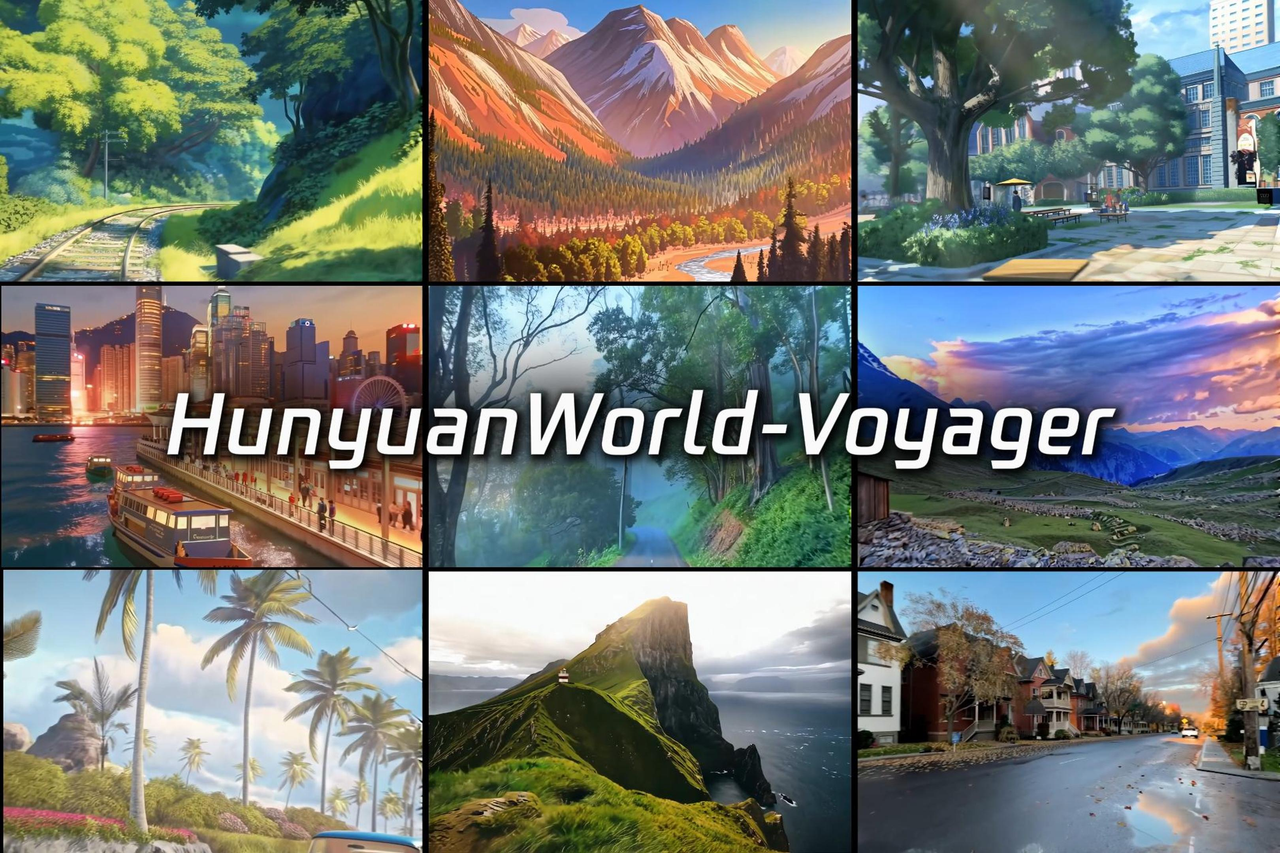
Developed by the Tencent Hunyuan team, Voyager is a highly innovative AI tool that pushes the boundaries of standard digital media by introducing interactive video generation paired with real-time 3D scene reconstruction. Designed primarily for researchers, developers, and tech-forward creators, this model serves as a bridge between traditional 2D media and immersive 3D environments. At its core, Voyager functions by seamlessly integrating dynamic 2D video generation with complex spatial depth and 3D mapping. While traditional video AI models are generally confined to flat, two-dimensional outputs, Voyager dynamically understands and reconstructs the spatial geometry of a scene as the video is being generated. This allows users to generate dynamic video content that possesses genuine spatial depth, opening up a realm of possibilities that standard video generation models simply cannot reach. The primary use cases for Voyager are incredibly advanced and varied. Game developers can utilize this technology to rapidly create interactive 3D environments for gaming or virtual reality experiences without having to build every asset from scratch. Furthermore, simulation engineers can leverage the tool to generate highly realistic, dynamic video content that accurately reflects spatial depth, which is crucial for training autonomous systems or running complex digital simulations. Additionally, it serves as a powerful foundational tool for research and development in the fields of real-time computer vision and 3D mapping. One of the most significant advantages of Voyager is that it is completely open-source and freely accessible to the broader developer community. This open approach encourages rapid iteration and experimentation, allowing teams to integrate cutting-edge 3D modeling and video generation directly into their own proprietary pipelines without the burden of expensive licensing fees. However, it is important to note that running such a sophisticated system comes with its own set of technical challenges. Voyager may require significant computational resources to run effectively. Organizations looking to deploy this model will need robust hardware setups to facilitate the intensive processing required for real-time 3D reconstruction and seamless video generation. Ultimately, the Tencent Hunyuan team has delivered a remarkable tool that stands at the absolute cutting edge of computer vision, offering a versatile and powerful resource for anyone looking to explore the future of interactive digital environments and 3D spatial modeling.
 Screenshot
 image
image
 image
image
 image
image
As an open-source project hosted on GitHub, Voyager is completely free to use.
Summarized from the official site: https://github.com/Tencent-Hunyuan/HunyuanWorld-Voyager
Yes, Voyager is completely free and open-source. This allows teams to integrate it into their pipelines without the burden of expensive licensing fees.
Voyager is an AI model developed by the Tencent Hunyuan team that combines interactive video generation with real-time 3D scene reconstruction. It bridges traditional 2D media and immersive 3D environments by generating video content with genuine spatial depth.
Yes, Voyager is fully open-source and freely accessible to the broader developer community. This open approach is designed to encourage rapid iteration and experimentation.
Voyager was developed by the Tencent Hunyuan team. They designed the tool to stand at the cutting edge of computer vision and 3D spatial modeling.
Running Voyager requires robust hardware setups and significant computational resources. This intensive processing power is necessary to facilitate real-time 3D reconstruction and seamless video generation.
A free, self-hosted AI studio with 200+ unfiltered

Objective, community-driven leaderboard for text-t

Optimize and secure AI coding agents with this ope

Generate highly realistic AI images from text with