
A free, self-hosted AI studio with 200+ unfiltered
Open Sourceaivideoimageself-hosted
Free
Video & Animation
Whisper.cpp is a high-performance, C/C++ implementation of OpenAI's wildly popular Whisper speech recognition model. Designed with efficiency and versatility in mind, this open-source project brings state-of-the-art audio transcription out of the cloud and directly onto your local hardware. Unlike standard API solutions that require constant internet connectivity and ongoing usage fees, Whisper.cpp operates entirely offline, making it a game-changer for developers focused on edge computing and data privacy.
So, who is this tool for? Primarily, Whisper.cpp caters to software developers, system architects, and tech-savvy creators who need to integrate robust speech-to-text capabilities into their applications. Whether you are building a desktop application, a mobile app, or a specialized embedded system, this tool provides the necessary framework without the bloat of heavy dependencies. It is especially ideal for projects where data privacy is paramount. By supporting 100% local processing, it ensures that sensitive audio recordings—such as medical dictations, confidential corporate meetings, or private interviews—never leave the user's device.
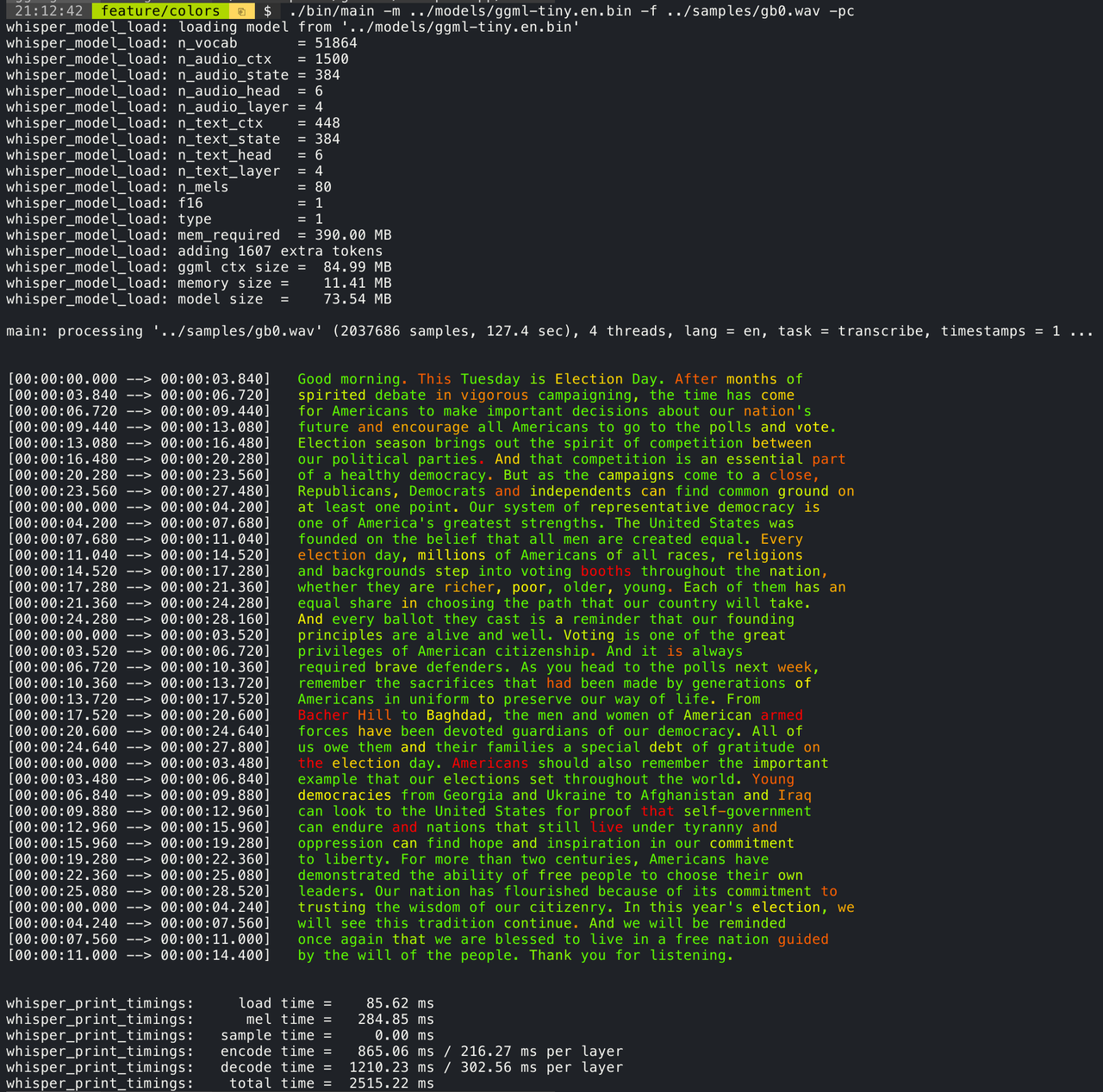
How does it work? At its core, Whisper.cpp leverages a hardware-efficient, dependency-free CPU inference engine. This means it does not strictly require a massive, power-hungry GPU to function. Instead, it is highly optimized to run on standard processors with a remarkably low memory footprint. This optimization allows it to run seamlessly across a vast array of operating systems and hardware architectures. It handles real-time speech transcription, offline generation of video subtitles and closed captions, and even supports multi-language transcription with direct translation to English.
However, Whisper.cpp is not a plug-and-play solution for the average end-user. The primary drawback is its accessibility for non-developers. To get started, users must possess enough technical know-how to manually download the required model weights and convert them into the necessary GGML format. There are no one-click installers or managed cloud dashboards, which makes it significantly less user-friendly than commercial APIs. Furthermore, because it is a pure C/C++ implementation, integrating it requires actual software development work rather than simple REST API calls.
Despite these entry barriers, the benefits are undeniable. For those willing to navigate the manual setup, Whisper.cpp offers an unmatched combination of portability, privacy, and performance. It empowers creators to build fully offline, privacy-focused voice assistants and edge devices without compromising on transcription accuracy.
 image
image
 image
image
The tool is completely free and open-source under the MIT license.
Summarized from the official site: https://github.com/ggml-org/whisper.cpp
Yes, whisper.cpp is an open-source project. It provides a high-performance C/C++ implementation of OpenAI's Whisper speech recognition model.
Yes, whisper.cpp operates entirely offline without requiring an internet connection. This makes it an ideal tool for edge computing and ensures complete data privacy by keeping sensitive audio recordings strictly on the user's local device.
No, whisper.cpp does not strictly require a GPU to function. It leverages a hardware-efficient, dependency-free CPU inference engine that is highly optimized to run on standard processors with a remarkably low memory footprint.
No, whisper.cpp is not a plug-and-play solution for non-developers or average end-users. It requires technical know-how to manually download model weights, convert them into the GGML format, and integrate the tool using actual software development work.
You can use whisper.cpp for real-time speech transcription, generating offline video subtitles and closed captions, and multi-language transcription with direct translation to English. It is especially useful for building desktop apps, mobile apps, and embedded systems where data privacy is paramount.
A free, self-hosted AI studio with 200+ unfiltered

Objective, community-driven leaderboard for text-t

Optimize and secure AI coding agents with this ope

Generate highly realistic AI images from text with