

A free, self-hosted AI studio with 200+ unfiltered
Open Sourceaivideoimageself-hosted
Free
Video & Animation
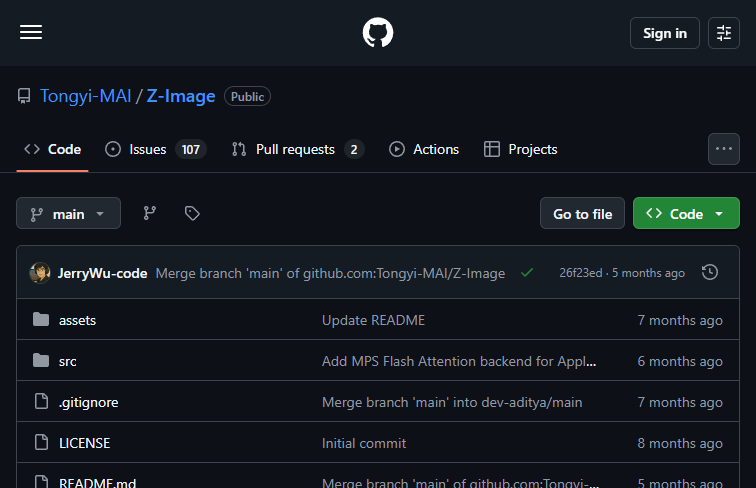
In the rapidly evolving landscape of AI image generation, efficiency and accessibility are becoming just as important as raw output quality. Z-Image is a powerful text-to-image generation model that emerges as a highly compelling solution for developers, researchers, and digital artists. Hosted on GitHub by Tongyi-MAI, this tool distinguishes itself through a highly efficient 6B parameter architecture. While many state-of-the-art image generation models rely on massive, resource-heavy frameworks, Z-Image takes a more streamlined approach. It proves that a relatively compact 6-billion-parameter size can still achieve exceptional results, making it a standout option for those who want premium image generation without the crippling overhead. So, how does it work? At its core, Z-Image functions as a text-to-image engine. Users provide detailed textual descriptions, and the AI translates these prompts into high-quality, visually striking images. Because it is optimized specifically for high computational efficiency, the model generates artwork swiftly while demanding significantly less processing power than many of its bulkier counterparts. This efficiency opens the door for a wide array of practical use cases. Game developers can use it to create visual assets, while marketing professionals can rapidly generate compelling graphics for campaigns. Furthermore, graphic designers can utilize Z-Image for the rapid prototyping of visual concepts, allowing them to iterate through ideas at breakneck speed. Additionally, because the model's architecture is open-source and openly documented, it serves as an incredible resource for computer scientists conducting cutting-edge AI research on efficient image generation. The pros of Z-Image are immediately apparent. Being open-source and completely free to use, it democratizes access to top-tier AI technology. The highly efficient architecture ensures that it punches well above its weight class, generating high-quality images that rival those produced by much larger models. However, the tool is not without its drawbacks. Because it is primarily offered as an open-source project rather than a polished commercial software-as-a-service platform, deploying and running Z-Image locally requires a fair amount of technical knowledge. Users will need to be comfortable navigating GitHub repositories, configuring environments, and managing their own hardware constraints. Ultimately, for tech-savvy creators and researchers willing to get their hands dirty, Z-Image is an absolute powerhouse. It beautifully bridges the gap between high-quality output and computational efficiency, making it a must-try tool in the modern AI toolkit.
 Screenshot
 image
image
 image
image
 image
image
Z-Image is an open-source model available for free.
Summarized from the official site: https://github.com/Tongyi-MAI/Z-Image
Yes, Z-Image is completely free to use. It democratizes access to top-tier AI technology by being offered as an open-source project.
Yes, Z-Image is an open-source model hosted on GitHub by Tongyi-MAI. Its architecture is openly documented, making it an excellent resource for researchers and developers.
Z-Image is a powerful text-to-image generation model. It uses a highly efficient 6B parameter architecture to translate detailed textual descriptions into high-quality images.
You can use Z-Image to rapidly generate high-quality visual assets for game development and marketing campaigns. It is also highly useful for graphic designers who need to quickly prototype visual concepts.
No, deploying and running Z-Image locally requires a fair amount of technical knowledge. Users must be comfortable navigating GitHub repositories, configuring environments, and managing their own hardware constraints.
A free, self-hosted AI studio with 200+ unfiltered

Objective, community-driven leaderboard for text-t

Optimize and secure AI coding agents with this ope

Generate highly realistic AI images from text with